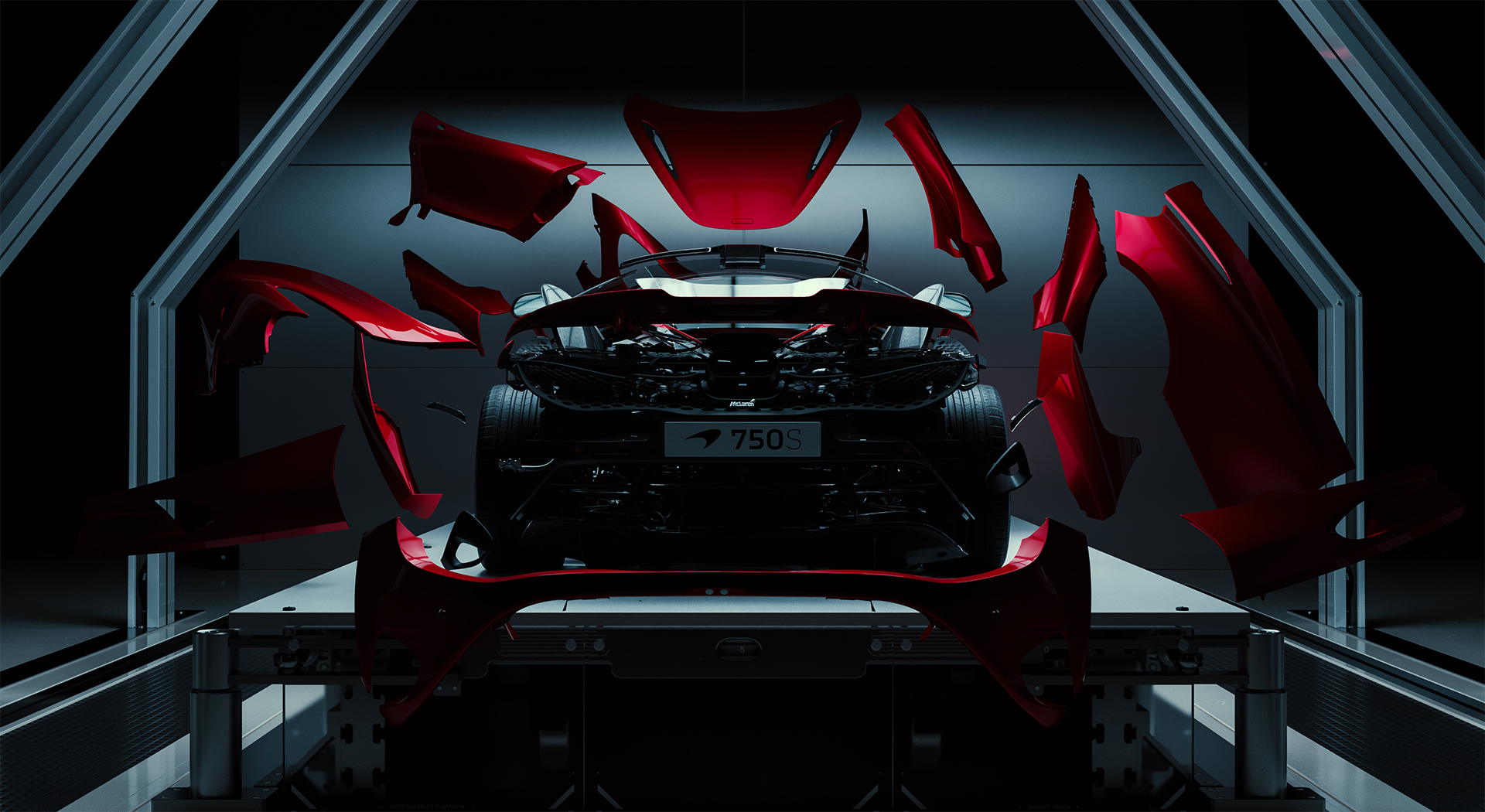
A disassembled red McLaren 750S on a platform, with its body panels suspended, showcasing the inner workings of the supercar.

Customer

750S - UNDER THE MICROSCOPE

There’s a saying in English, ‘The devil is in the detail’ – but often there’s beauty in the detail too. That’s certainly true of the new McLaren 750S: while the headline figures of 750PS and 0-62mph in 2.8 seconds certainly grab the attention, for McLaren enthusiasts – for anyone who really loves engineering – there’s a deeper, more microscopic story to tell.

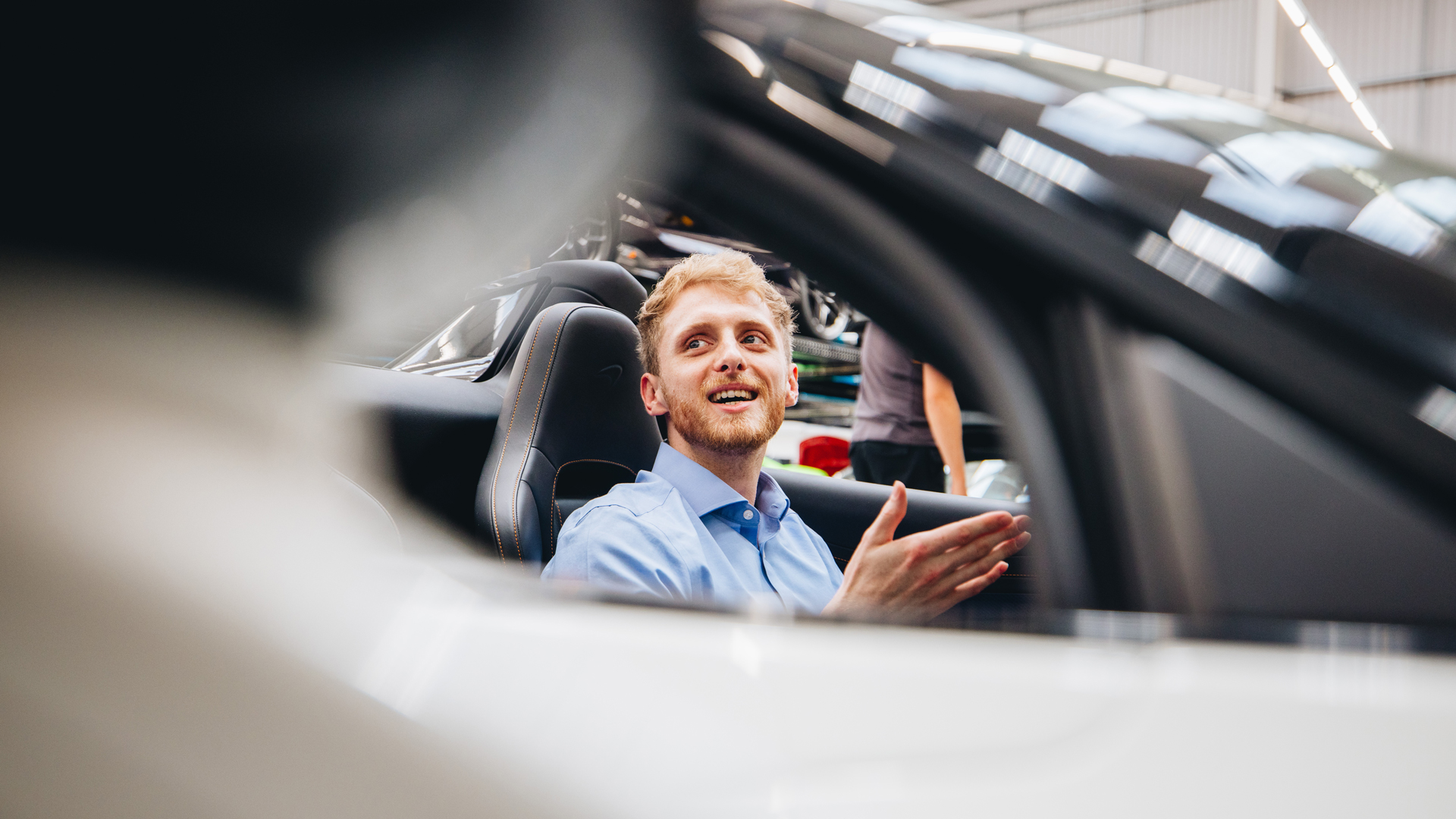
And no-one is better to tell it than Shane Harman, Product Manager for the new 750S, who knows the new supercar inside out. Shane starts by describing the weight savings that contribute to the car’s 1277kg dry weight – making it the lightest series-production McLaren road car ever. So where did the reductions come from?

‘The biggest items were the seats and the new alloy wheels, which save a huge amount over the 720S; but really we saved weight everywhere – including a couple of kilos with the exhaust, there’s a lighter windscreen, and even the driver display is a couple of hundred grams lighter.’
1854

Those optional carbon-shelled Super-Lightweight race seats were first introduced in the McLaren Senna and later offered in the limited edition 765LT. ‘It’s a nice example of a technology trickle-down from the Ultimate Series,’ Shane explains. ‘This is the first time they’ve been offered in series production car’.


The ten-spoke Ultra-Lightweight forged alloy wheels, however, have never been seen before, and they save a further 13.8kg. These are also the lightest wheels ever offered on a series production McLaren.


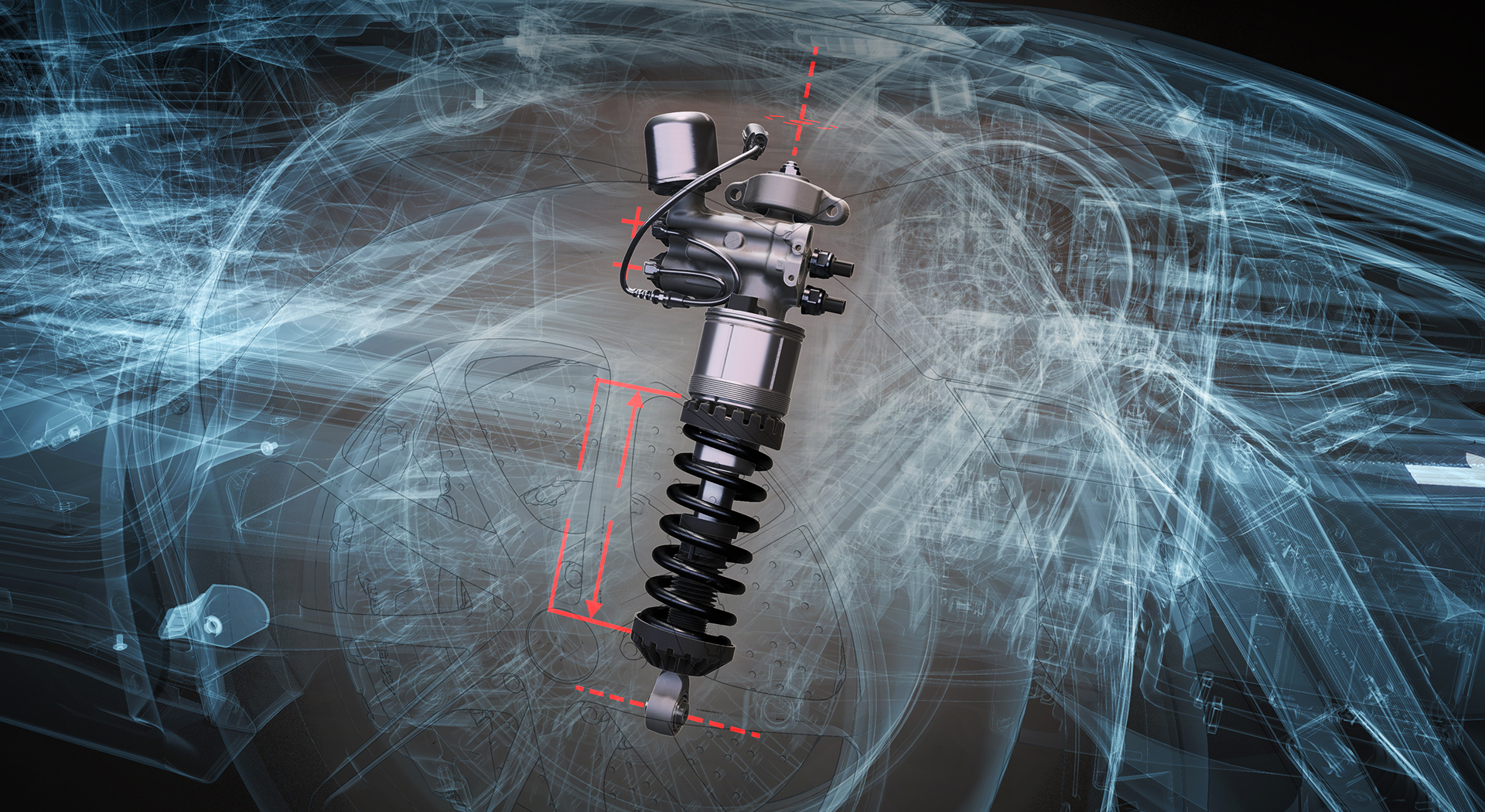
Kilograms were also shaved off the new suspension system, though weight saving wasn’t the primary focus there; instead, improved feel and feedback were the goal.

1853

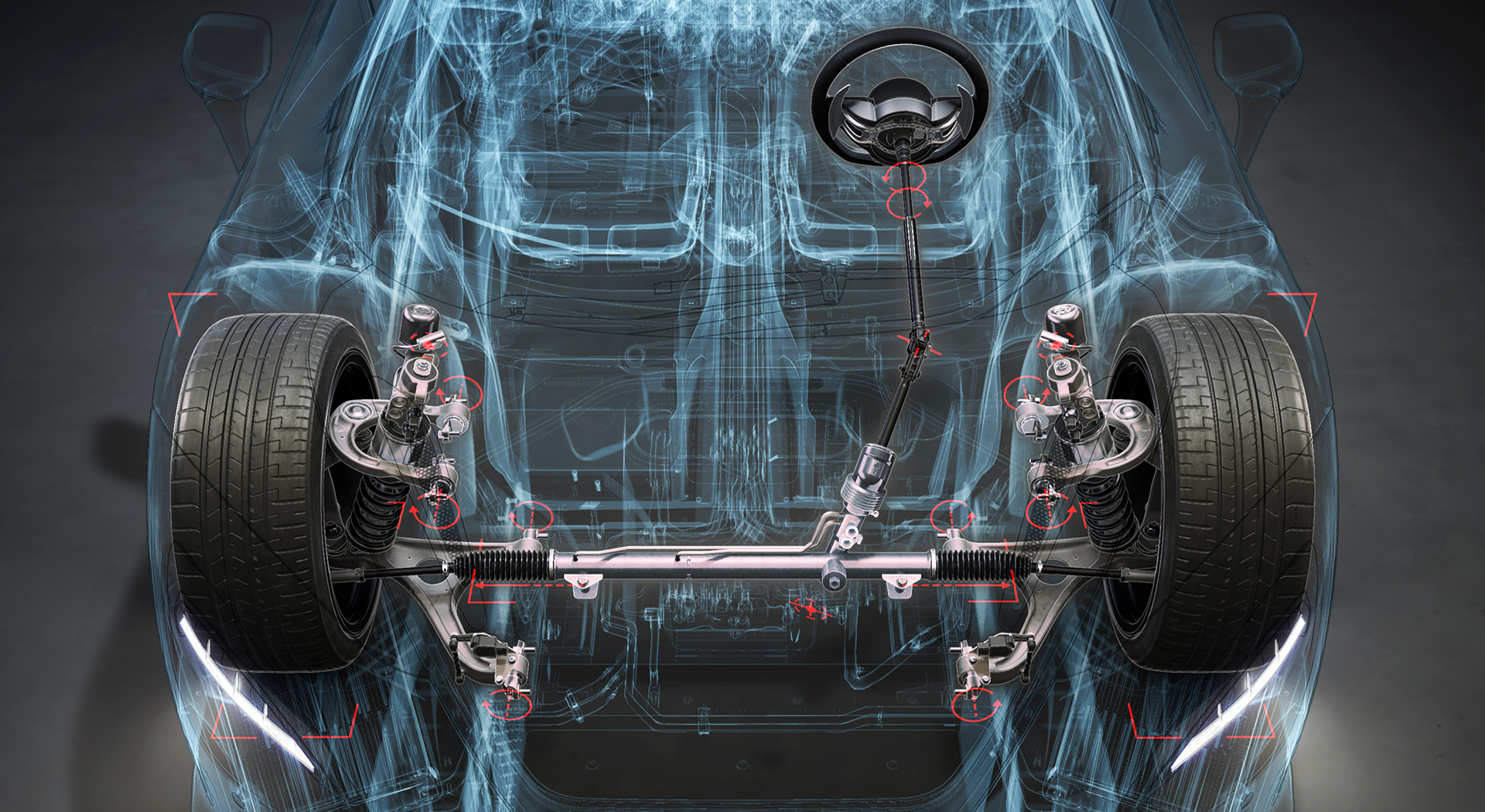
‘The 750S has a faster steering rack, which is not something we often do,’ Shane explains. ‘But it improves the sense of agility of the car.’


The steering remains McLaren’s signature hydraulic system, simply because it’s still the best. ‘It’s not like we’re set in our ways,’ says Shane. ‘We regularly meet with our partners and suppliers and try out their latest and greatest electric steering systems. But for us, every one we’ve assessed lacks the feel and feedback of our hydraulic rack – that’s why we continue to use it.’


Another change is the widening of the front track by 6mm. How much of a difference does a tiny change like that make?


‘I think in isolation, most people would be hard pressed to feel that change!’ Shane admits. ‘But it’s all done as a package and together the changes make a big difference. So yes, the 750S is 6mm wider in the front track, the front springs are softer and rear springs are stiffer. These changes give the car a little bit more ‘bite’ to the front end, make a car that wants to rotate more.’


The ride has also been comprehensively redesigned. ‘It’s a complete overhaul,’ Shane explains. ‘It’s the springs, valves, dampers, the accumulators, it’s the programming… it’s such a big step forward, to do the system justice we felt we should rename it the third iteration of our Proactive Chassis Control, so it’s now “PCCIII”.’

1851

The changes to the accumulators are another first. Previously, these small metal bulbs on the suspension struts did not allow any kind of adjustment, but McLaren engineers were able to make these tunable too. ‘We’ve never done it before,’ says Shane. ‘Again it’s a small change in isolation, but as part of a wider strategy, it shows how we left no stone unturned in developing the car.


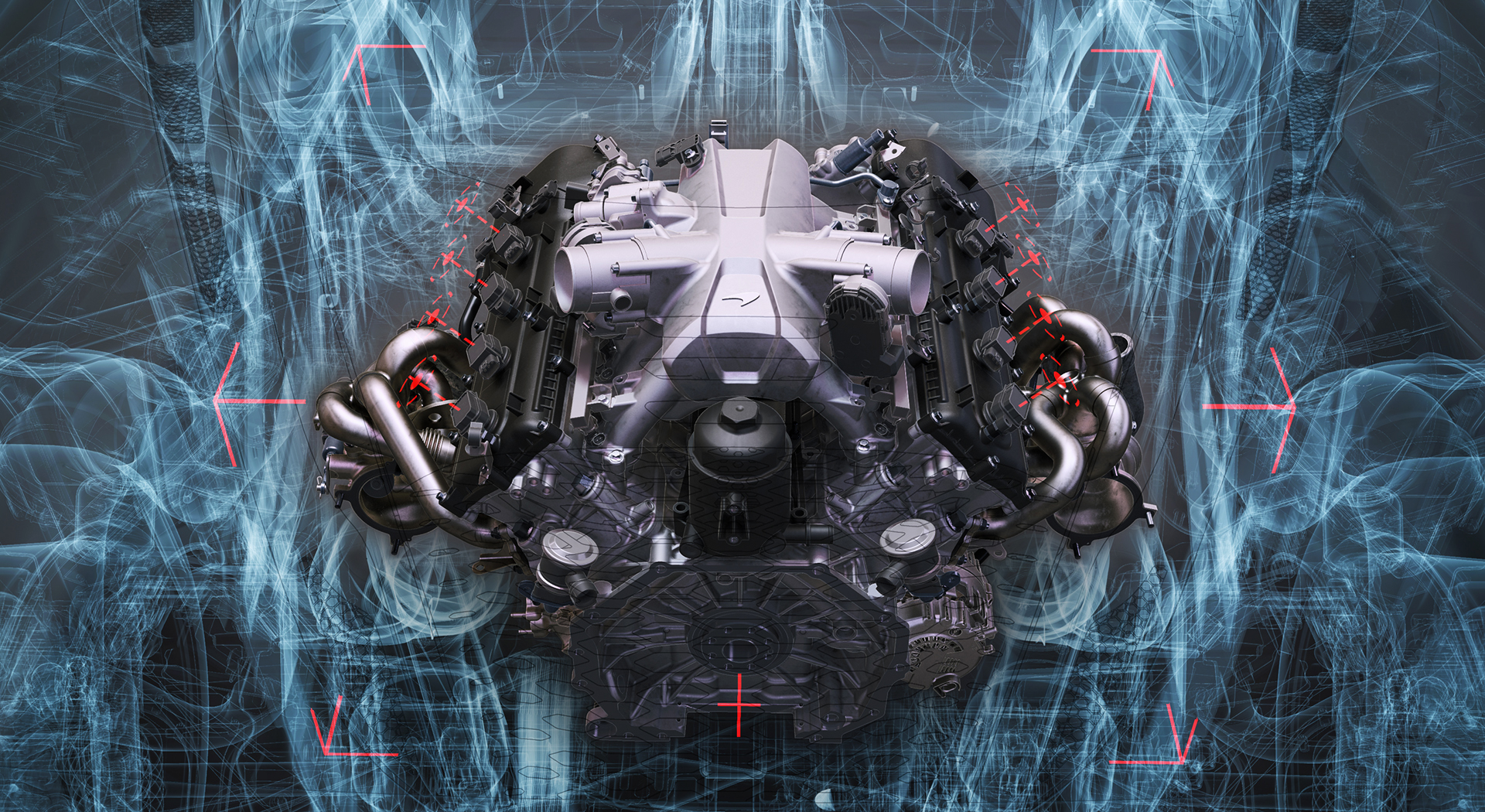
The engine has also been revised to further dial up the excitement. As well as lighter pistons, made using a different alloy, that allow the engine to rev faster, the engine mounts that fix the V8 to the chassis have also been tuned. ‘Essentially, we adjusted the stiffness of rubber in the mounts,’ Shane explains. ‘The stiffer they are, the more you get of what the engineers call Noise Vibration and Harshness or NVH. We wanted to bring more of the “good” NVH into the cabin to allow the driver to really feel the engine. We haven’t gone as far as the extreme 765LT, instead we’ve given the 750S more engagement but you can definitely live with it every day.’

1849

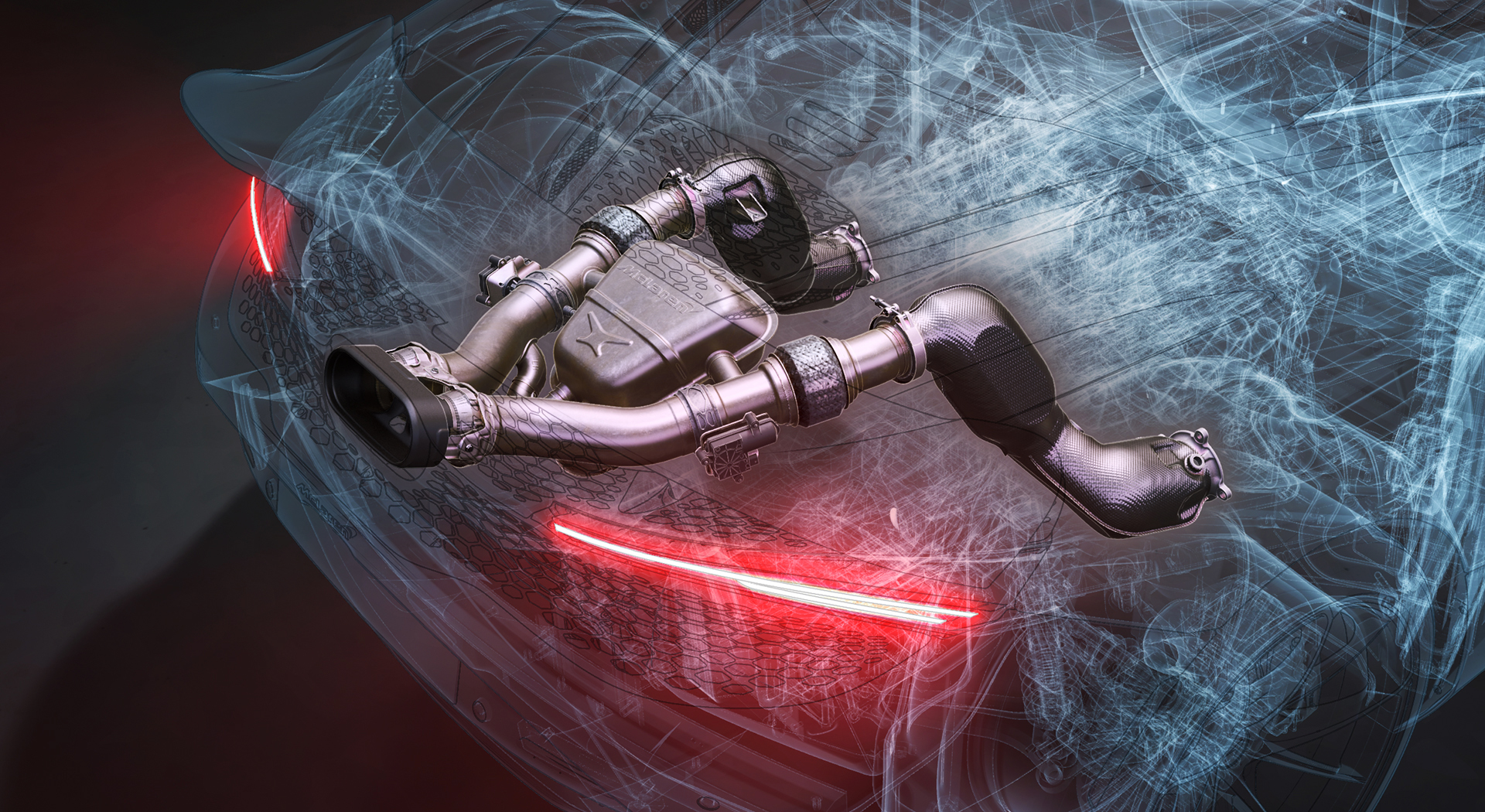
The same is true of the new exhaust. ‘The brief to the engineering team was to place the exhaust outlet wherever they though would make the best sound. A lot of people think the best sounding McLaren of recent times was the Elva, which had a really interesting exhaust strategy, because it had two outlets in the centre and two placed a little wider. The centre exit exhaust gave the sound that higher pitched crescendo and that’s what we’ve done in the 750S. So that was a bit of a learning from Elva, and if you spend time in the 750S, it sounds amazing.’

1850

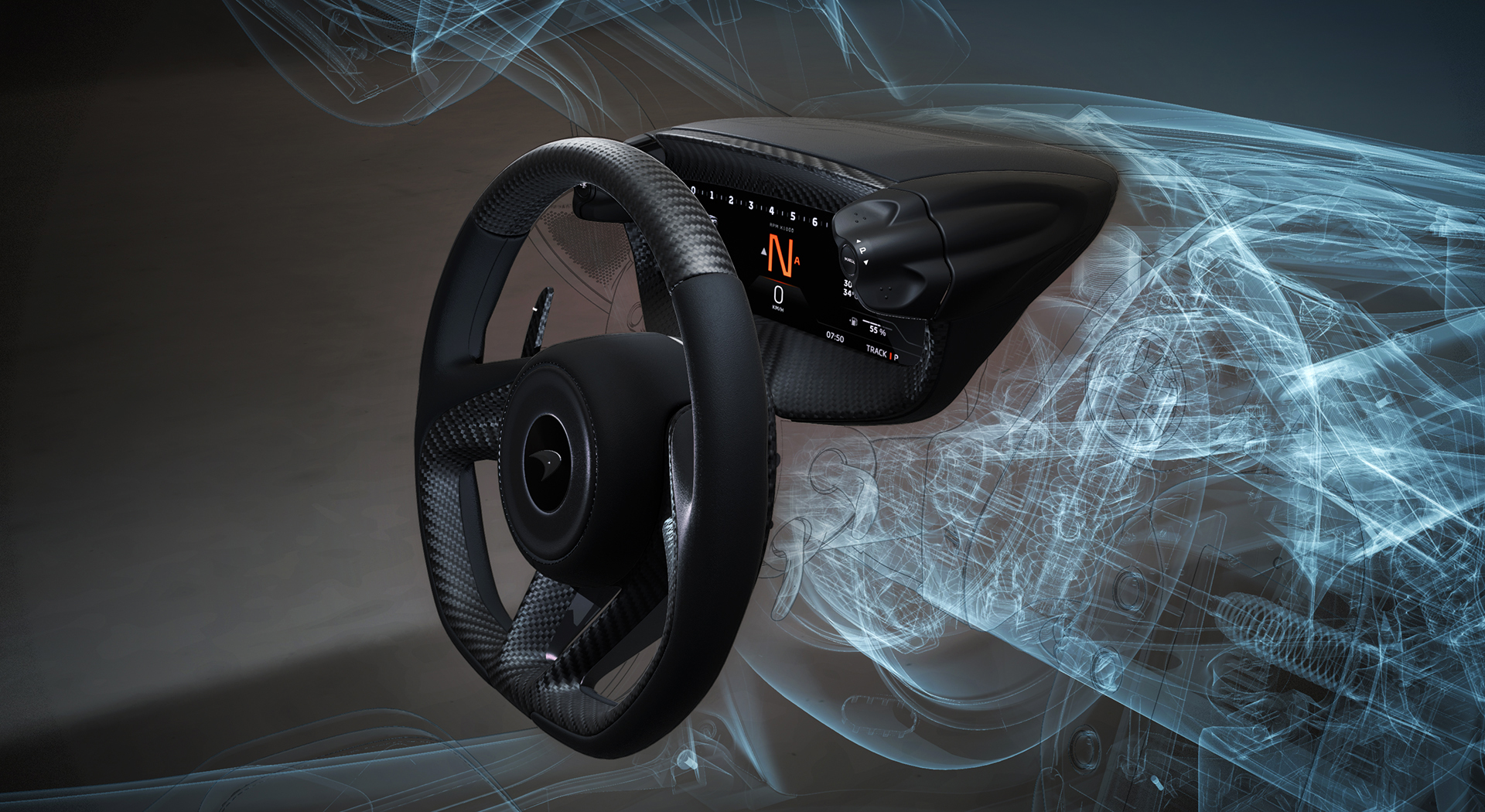
Inside the car, the Elva also inspired the new Powertrain and Handling Mode Selector Switches, mounted higher up on the instrument binnacle, rather than lower down on the dashboard. The 750S also gets a new, high-definition screen that Shane says is ‘much better, much clearer and more responsive’; it has Apple CarPlay as standard; and it introduces the Mclaren Control Launcher or MCL button – ‘which allows you to have powertrain, handling, transmission and aero settings all configured as you wish on one button,’ says Shane. ‘It’s pretty cool and much quicker to use.’

1848

So are there any other improvements that Shane feels deserve drawing out for our attention?


‘Well, the vehicle lift system is a subtle detail, compared to things like the chassis and engine,’ says Shane. ‘But as a day-to-day improvement over the 720S, I think it’s a really nice touch. We’ve gone from a button on the stalk, which was a bit fiddly, to a button in the dash, and previously by the time you’d raised the nose you were over the bump – now the lift has gone from ten seconds to just four seconds to raise the front of the car.’


A saving of six whole seconds? In Formula 1 that would be a new lap record. I told you details were important.